GuideAI in production
Auditing AI-generated tests and documentation before cleanup
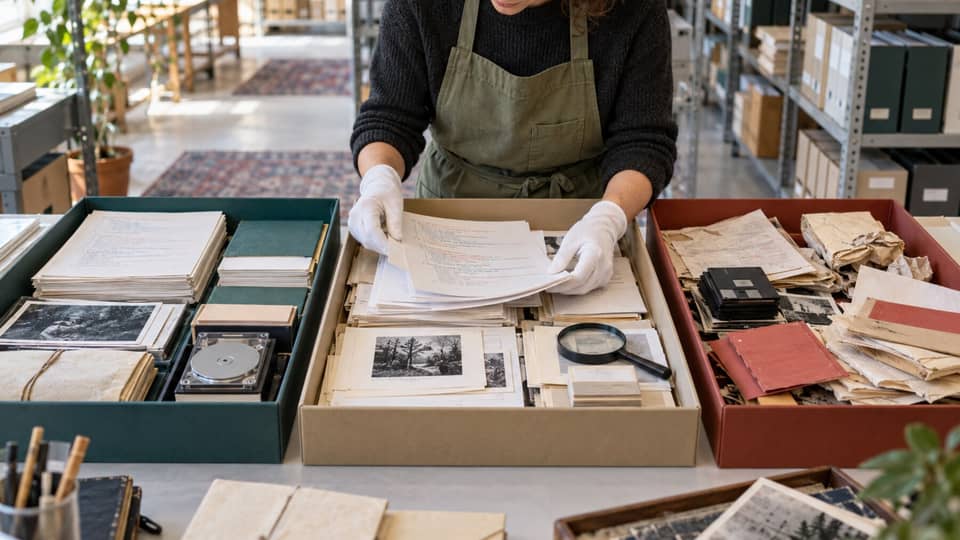
Review the claim each test or document protects, challenge the evidence, and record a keep, rewrite or retire decision before deleting repository history.
Walkthroughs for observability, incident response and AI-assisted operations.
Browse guides with article filtersStart with what AI can do for operations, and where judgment still matters.
Read AIOps fundamentalsMake metrics, logs and traces work together.
Read Observability for SREBuild an incident response practice that learns.
Read Incident management with AIInstructions, examples and implementation notes.
Review the claim each test or document protects, challenge the evidence, and record a keep, rewrite or retire decision before deleting repository history.
Run a candidate log classifier beside the current route, preserve complete outcomes, and promote only the slices whose mistakes and review cost are understood.
A client-side SSE probe separates first answer text from normal completion. Fixed arrivals and outcome counts show whether a serving change delivers more useful answers.
Instinct brings personal tasks into connected services. A hypothetical booking and notification worker show how permission, provider confirmation and uncertain results affect what happens next.
Follow a slow AI request from Cloudflare to an instrumented origin, configure sampling, and verify that the trace preserves the evidence needed to investigate.
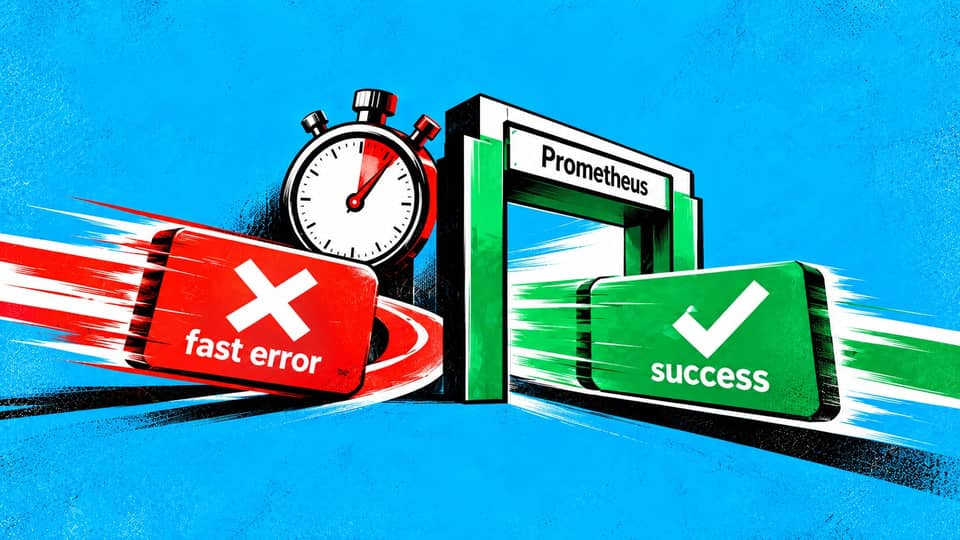
Build a latency SLI from Prometheus histogram buckets, include failed requests, and compare classic and native queries with a worked search-service example.
A synthetic order-service incident follows a shared handoff through page edits, new findings and shift change, including the review and access work involved.
Tail sampling selects recorded traces by error, latency and other evidence. A checkout timeout shows how routing, waiting time and memory affect the trace a responder can retrieve.
CodeRabbit brings AI feedback into pull requests, editors and the CLI. A retry loop that exceeds its caller’s deadline shows the kind of finding that can repay review time.
OpenShell can stop an agent after Kubernetes has accepted its scaling request. Recovery then depends on the Deployment state, available replicas and customer-facing result.
A release-note digest and a changed maintenance event show two uses of Muse’s persistent agent: gathering information over time and preparing a connected-account update.
A durable queue can preserve telemetry through an outage, then take longer to catch up. Arrival rate, export capacity and event age explain what recovery looks like.