

On this page3 sections
Cloudflare has added a search step to the same gateway that handles an application's model requests. Its October 2 announcement introduces Web Search API in beta, with Ceramic.ai, Exa and Linkup as the initial providers. For an AI assistant investigating a changing API, the useful addition is a way to find current pages and carry their sources into the answer.
The service returns search results, rather than a finished judgment about a production system. That distinction matters for an operational assistant: finding a plausible explanation is different from establishing that it applies to the version running in front of you.
A search call with a common response
According to Cloudflare's mechanism documentation, the gateway forwards the query to the chosen provider and normalizes the response. Each result has a URL and title; a description and other fields may also be available. Changing the provider parameter changes the search service without requiring a different result format in the application.
Search requests appear alongside inference requests in AI Gateway logs. That gives the application team a place to inspect the retrieval step as well as the model call. It does not tell them whether the model used the right passage, so the application still needs to preserve the connection between a result and the claim it supports.
The integration reference describes an authenticated REST endpoint and a Workers AI binding. A backend can call POST /accounts/{account_id}/ai/websearch/; a Worker can call env.AI.websearch() with its gateway ID and query. The reference example for model tool use has the application execute the requested search, then pass its results back to the model. Cloudflare's launch blog describes built-in server tools as forthcoming, so an application should not plan its current integration around that future orchestration.
The page that changes the answer
Consider a hypothetical on-call assistant explaining why an API request began failing after an SDK upgrade. Search finds an older successful example and a newer release note describing a removed parameter. A summary that blends them into general setup advice loses the useful discovery: the old example no longer fits the deployed version.
Our source-comparison approach gives that newer exception priority over the number of older examples. In this search workflow, retain the page URL, applicable version and passage that changes the diagnosis. Then the responder can inspect the reason for the proposed correction instead of treating a fluent answer as an unexplained instruction.
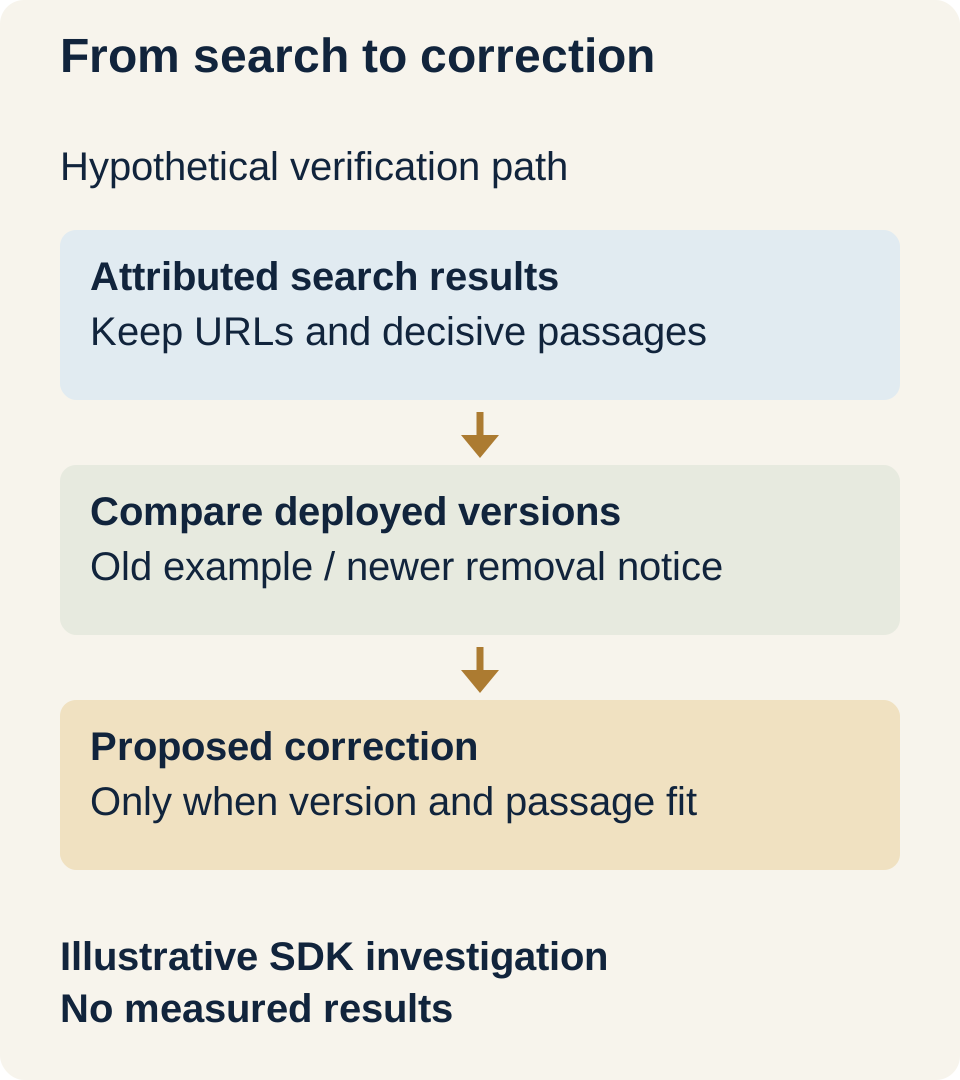
If the assistant cannot establish the deployed version or retrieve the decisive passage, the next useful output is that unresolved comparison. It should not recommend removing the parameter merely because a search result mentions its removal. A team that already has a current, complete internal reference may gain less from public search than one investigating a newly changed external service.
Provider choice also changes the agreement
The gateway offers payment through AI Gateway credits or an existing provider key. Cloudflare's provider reference says credit-funded calls use the provider's list API price without an added markup; with a supplied key, the provider bills under the customer's agreement. A common API format makes switching convenient, but does not make the commercial or data terms identical.
There is a specific documentation disagreement worth resolving before sending sensitive queries. The October 2 changelog says all three providers support Zero Data Retention for requests through Cloudflare, while the provider reference reviewed the same day lists Exa as not supporting it. Those statements should not be combined into a blanket retention assurance. Check the selected provider's current agreement and the gateway's own logging configuration; otherwise keep the query free of incident secrets.
The beta's practical contribution is a visible, attributed retrieval step for an AI workflow. For the hypothetical SDK investigation, success would be an answer that shows which current passage supersedes the older example and why it applies to the deployed version. That is a result a responder can check, and a more useful target than simply adding search to every model call.
Source context
This article does not include external reference links. Read it as the author’s perspective and evaluate the guidance against your environment.
Report an error or outdated detail