The on-call calendar improved. Who is still awake?
Fewer primary shifts can still leave the same specialist answering the phone. Follow the interruptions, shared effort and next-day repairs before calling the workload lighter.
Walkthroughs for observability, incident response and AI-assisted operations.
Browse guides with article filtersStart with what AI can do for operations, and where judgment still matters.
Read AIOps fundamentalsMake metrics, logs and traces work together.
Read Observability for SREBuild an incident response practice that learns.
Read Incident management with AIInstructions, examples and implementation notes.
Fewer primary shifts can still leave the same specialist answering the phone. Follow the interruptions, shared effort and next-day repairs before calling the workload lighter.
A paused pipeline can hold the change needed to restore service. An error-budget policy needs a precise route for that repair and a separate way to resume ordinary releases.
Recognizing a repeated incident event does not establish what Slack or Jira did with the first one. This reference design tracks arrivals and destination results separately.
A calm fleet chart can hide a regional checkout failure. Keep the affected requests and their time window together as you move from the first panel to resource queries and logs.
In a hypothetical incident, errors began at 14:02 and the rollout started at 14:05. A reusable prompt helps an assistant turn that mismatch into a useful next check.
Work through request and time allowances, then fill in the release rules, exception route and follow-up record that make the worksheet usable.
A directory under /tmp can hold application recovery data. Follow the failing path through mounts, capacity and permissions to understand what the service actually sees.
A shared connection pool shows how a tuning change can finish more work while slowing some requests. Follow the wait, test the limit and compare both outcomes.
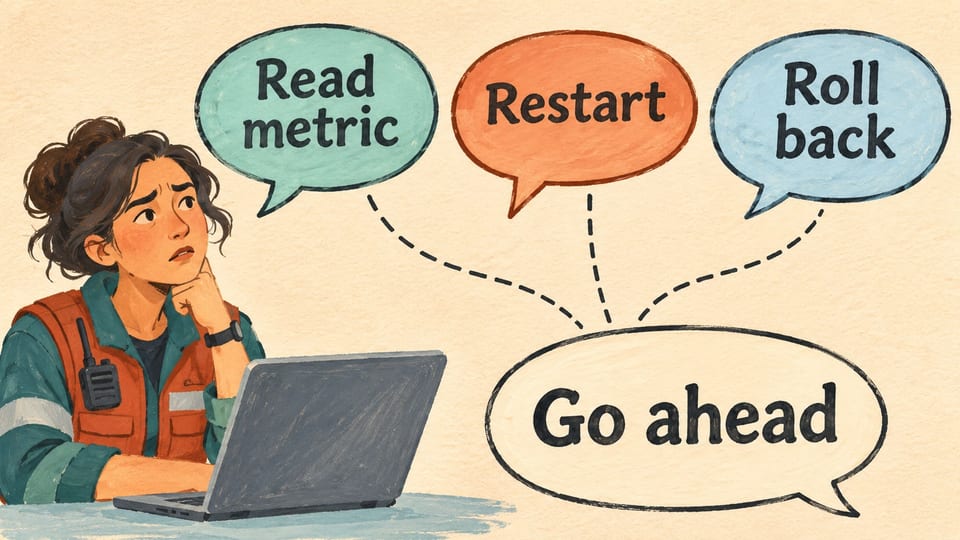
“Go ahead” makes sense only when everyone knows which proposal it approves. Link the conversation to the action and its result, including what remains unknown.
A successful demonstration is the start of the comparison. Follow the alerts through specialist corrections, connector upkeep and the ordinary on-call rotation.
A recommendation can arrive early and still wait for someone able to act. Follow the incident timeline to separate missing evidence, missing authority and useful verification.
Keep the customer’s operation intact as a report becomes a ticket, an investigation and an answer about whether to wait or retry.