
On this page5 sections
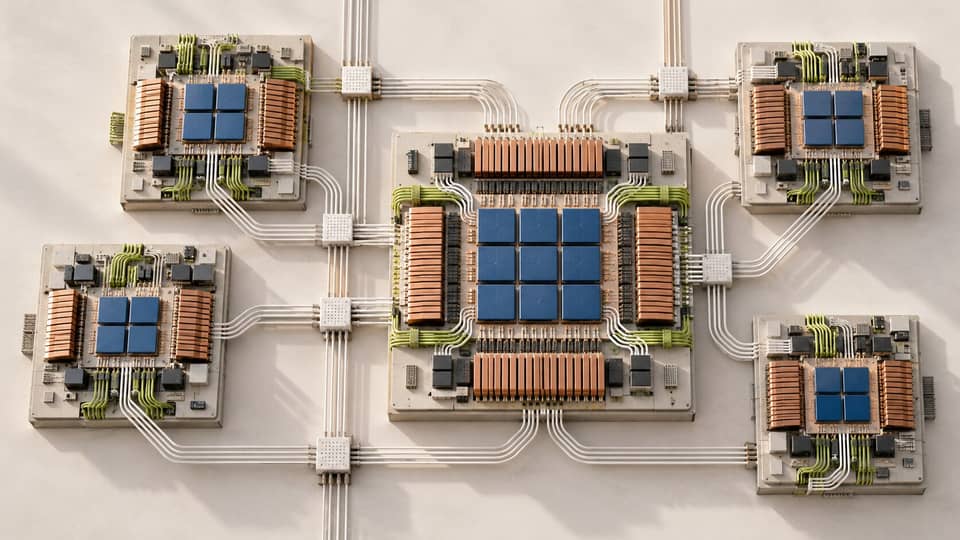
Microsoft introduced Maia 300 on October 12 as the accelerator system it expects to make the primary inference platform for its own products and services. The company plans multi-gigawatt deployments beginning in 2027. That scale is the headline, but the more useful detail for operators is where Microsoft says the efficiency comes from: the chiplets, memory layout, data movement, rack network, power, cooling, and software are designed as one system.
This matters because AI capacity is rarely limited by one number on a chip specification. Long-context reasoning can become a memory-movement problem. Interactive agents can become a latency and queueing problem. A dense rack can become a power and cooling problem. Maia 300 is Microsoft's attempt to move those limits together instead of optimizing each layer in isolation.
The announcement is substantial, but its performance figures are still Microsoft claims about a platform that will scale in 2027. Before treating Maia 300 as a capacity improvement, compare latency, accepted completions, and rejections under the same offered workload. That comparison turns a hardware announcement into an operational question a service team can answer.
Maia 300 changes the system boundary
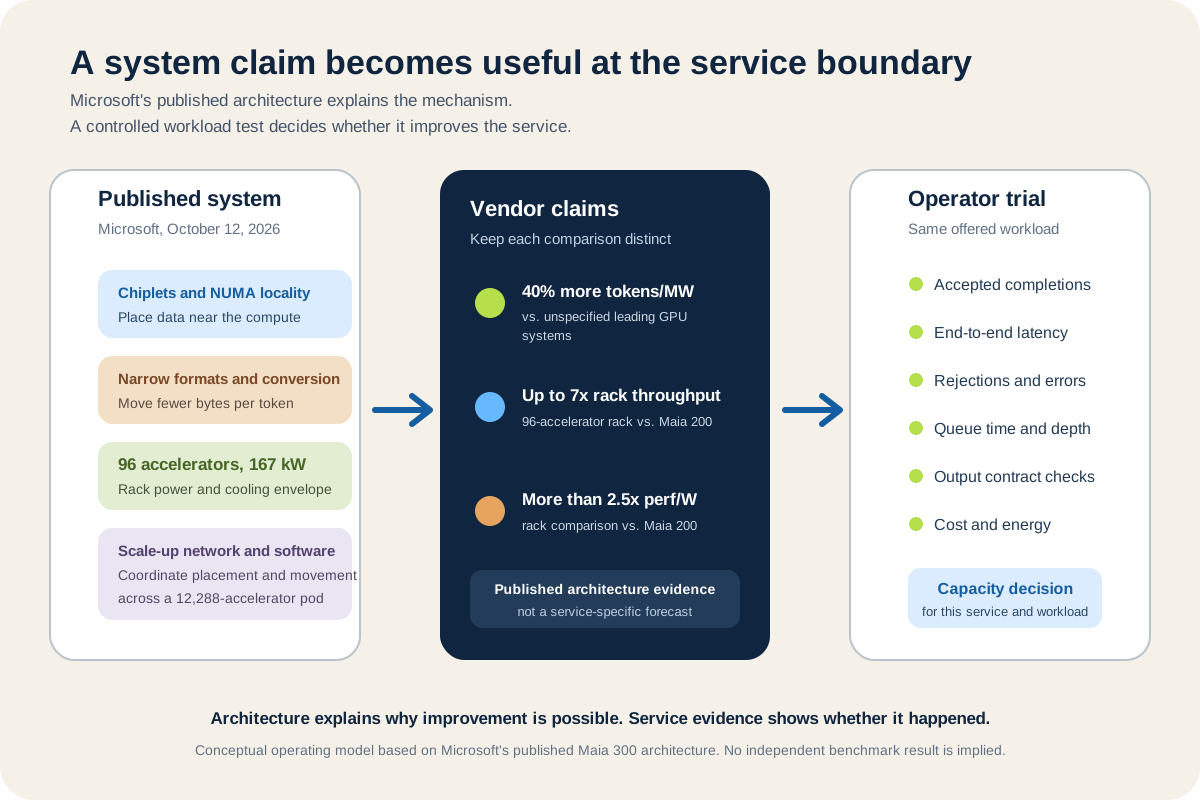
Microsoft's architecture description starts with locality. Maia 300 uses a chiplet design and moves from uniform memory access to a non-uniform memory architecture, or NUMA, across those chiplets. Software can place data closer to the compute that needs it instead of paying the same movement cost for every access. Narrower numerical formats and hardware-assisted conversion reduce the number of bytes moved for each token.
The same idea continues beyond the package. A rack holds 96 accelerators across 24 trays and consumes 167 kilowatts, according to Microsoft. The scale-up domain extends to a superpod of 12,288 accelerators. Microsoft's software-defined dataflow architecture coordinates data placement, movement, conversion, and synchronization from local memories through the network.
Those details explain why the company describes Maia 300 as an inference system rather than a faster successor chip. Decode-heavy work does not improve simply because arithmetic gets faster. The model state has to remain available, tokens have to move through the right memory path, accelerators have to exchange data without stalling, and the rack has to stay inside its electrical and thermal envelope.
Three performance claims answer three different questions
Microsoft published three prominent comparisons. Its announcement says Maia 300 is expected to deliver 40 percent more tokens per megawatt than leading GPU-based systems. A full 96-accelerator rack is expected to deliver up to seven times the token throughput of Maia 200. The deeper architecture post says the new rack delivers more than 2.5 times the performance per watt of Maia 200.
These numbers are not interchangeable. Tokens per megawatt asks how much inference work fits inside a power budget. Rack throughput asks how much aggregate work the complete rack can produce. Performance per watt compares useful output with energy consumed. The seven-times figure also compares a denser 96-accelerator Maia 300 rack with its predecessor, so it should not be read as a seven-times per-chip gain.
Microsoft has not published enough workload detail in these announcement posts to turn the figures into a service forecast for another environment. The company does not identify the GPU systems behind the 40 percent comparison, and the result will depend on model architecture, precision, sequence lengths, batching, and latency objectives. That does not make the figures meaningless. It defines what they can support today: a vendor claim about Microsoft's co-designed platform, not an independent promise for every model or request mix.
A service trial needs the same offered workload
Consider a hypothetical support-summarization service replaying one sanitized day of requests against its current inference path and a future Maia-backed path. The arrival pattern, model revision, prompt templates, response limits, and acceptance checks stay fixed. The candidate produces more tokens within the same power envelope, but that alone does not settle the rollout.
The service team also records accepted completions, rejected requests, queue time, time to first token, end-to-end latency, output contract failures, and total energy for the observation window. If the candidate completes more accepted work without moving failures into the queue or the application, the capacity claim has operational meaning. If it achieves better token efficiency by changing batching in a way that breaks the interactive latency objective, it may still be useful for asynchronous work, but it is not a drop-in improvement for the original service.
This is the same measurement discipline used in the site's multi-GPU capacity analysis: hold offered demand steady and report completed work and rejections beside latency. It also fits the broader power-and-cooling reliability model, where software symptoms can originate in a physical limit without proving which physical limit caused them.
What operators can measure before 2027
Most teams will not operate a Maia rack directly. Microsoft says Maia 300 will support its own services, including Copilot, GitHub, Teams, and Microsoft Foundry, while the larger deployment begins in 2027. If Azure does not expose the hardware choice for a workload, customers should measure the service boundary they can actually control: throughput at the contracted latency objective, errors and throttling, cost per accepted task, regional availability, and behavior during scaling or recovery.
Teams that eventually receive a selectable Maia-backed service or dedicated capacity can add lower-level evidence. They can compare queue depth, batch behavior, memory pressure, host-to-accelerator movement, power telemetry, and failure-domain recovery. The inference compatibility guide adds another necessary gate when the serving stack changes: performance does not compensate for a broken tool call, structured output, streaming event, or stop condition.
The boundary matters. When the platform hides accelerator placement and scheduling, trying to attribute a latency change to Maia is speculation. Measure the service result and the conditions exposed in the contract. When the hardware and runtime become observable, the investigation can move deeper without pretending that a chip metric is already a customer outcome.
Why the announcement matters now
Maia 300 matters because Microsoft is treating inference efficiency as a system property across compute, memory, networking, power, cooling, and software rather than a peak chip-speed claim. NUMA-aware placement, narrower data formats, denser racks, scale-up networking, and datacenter telemetry all target the places where large inference fleets lose usable capacity.
The published gains are a credible reason to watch the 2027 rollout, but not yet a reason to rewrite a capacity plan around the headline ratios. The useful test is straightforward. Replay representative demand, preserve the model and application contract, and compare accepted work, latency, rejections, cost, and energy over the same window. If Maia 300 improves that complete result, the architecture has delivered something an operator can use.
Source context
Source links appear within this article. Read them alongside the author’s analysis and evaluate the guidance against your environment.
Report an error or outdated detail