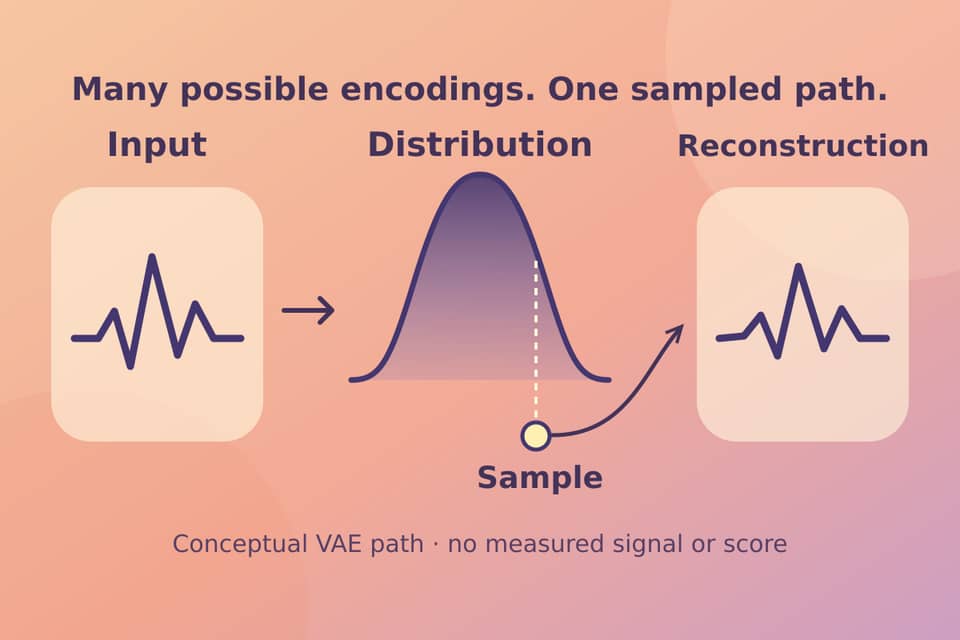
What a variational autoencoder sees in telemetry
Follow a traffic promotion and a familiar fault through a variational autoencoder. Learn what reconstruction measures and where a separate service check still matters.
AI in production: tools, operating patterns, costs, and failure modes.
Follow a traffic promotion and a familiar fault through a variational autoencoder. Learn what reconstruction measures and where a separate service check still matters.
Give a timeout detector varied queue data while keeping the overlapping retries it must find under your control.
A runnable Python example gives the scheduler a failure status and leaves one traceback for the person who has to find out what happened.
A misrouted ticket shows what an automated decision can hide and what a reviewer needs to put the request back on track.
Follow one worker restart through a lost reply, shared capacity limits and the service check that tells you whether the repair helped.
Two services send their counts. A short Python program finds the combined error rate and shows where the collector still has work to do.
A five-minute draft can help the team without freeing another project slot. Follow review, correction and upkeep to see what the business can use.
A slow order, a release and a dependency outage show where AI-assisted observability helps, and what the responder still needs to establish.
An early drop in traffic can come from a planned shutdown or a broken entry point. Use a baseline to spot the change and incident evidence to decide who needs to act.
Run a small keyword router, then compare a learned classifier by how long it takes for a team that can help to accept the ticket.
A dashboard can refresh long after its measurements stop. Follow the event through collection, evaluation and delivery to find where the view went stale.
Turning messy notes into a useful update is different from knowing what happened next. Separate the model’s learned abilities from the information and tools its app supplies.