Four free GPUs still need a good route between them
NVIDIA Topograph gives schedulers a map of hardware connections. The useful result is a job that finishes sooner, including the time spent waiting for a better group.
Guides, news and explanations about AI and reliable systems.
Not sure where to begin? Choose a short reading path, or browse at your own pace.
NVIDIA Topograph gives schedulers a map of hardware connections. The useful result is a job that finishes sooner, including the time spent waiting for a better group.
Build repeatable cases and check recovery independently, with a runnable Python grader.
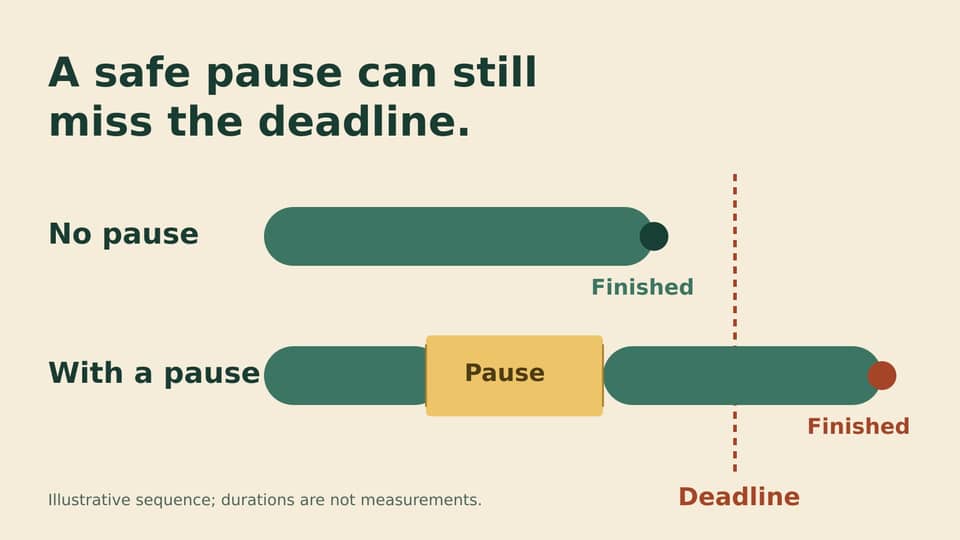
A power reduction can leave an AI evaluation intact but too late for the release decision. Follow the job through the pause, the restart and the agreement its owners need to make.
“Restart after the queue drains” is not the same as “restart approved.” Follow that small difference through Claude’s conversation summaries and Opus 5.5 replay checks.
A missing confirmation leaves an awkward question. Claude’s Chrome transcripts can help reconstruct the attempt, while the application’s records establish its effect.
Memory throttling may keep an inference process alive while its answer arrives late. Follow the effective settings, memory pressure and completed requests together.
An upgrade can keep records flowing while searches and paging routes lose their match. Follow a known task through Kubernetes metadata to its responding team.
A rejected incident summary makes a useful Splunk trial: follow its attempts, charges and corrections to learn what one accepted task really took.
How Herdr keeps coding sessions available while you detach, and what changes when its server restarts.
Separate detection from response and find delays that an improving average can conceal.
The permissions, state and recovery paths an agent needs when its tool calls can change a running service.
Use instrumentation and context propagation to connect the evidence in an investigation.